Listen to this article:
TL;DR: Traditional SEO vs AI SEO is not a choice, it is two jobs. Traditional SEO ranks your page so people click. AI SEO gets your business cited inside AI answers. Here is what matters most:
Most teams treat this as a fight where one side has to lose. It is not. After mapping how dozens of businesses show up across both Google and AI answers, the pattern we keep seeing at Genius Rank is simple. The brands winning in ChatGPT and Perplexity are almost never the ones that abandoned traditional SEO. They are the ones that kept it and added a second layer on top. The split is not old versus new. It is one job versus two.
So here is the honest version of the comparison: what actually changed, what still works exactly like it always did, and the one shift that decides whether an AI engine trusts you enough to put your name in an answer.
Traditional SEO vs AI SEO: The Short Answer
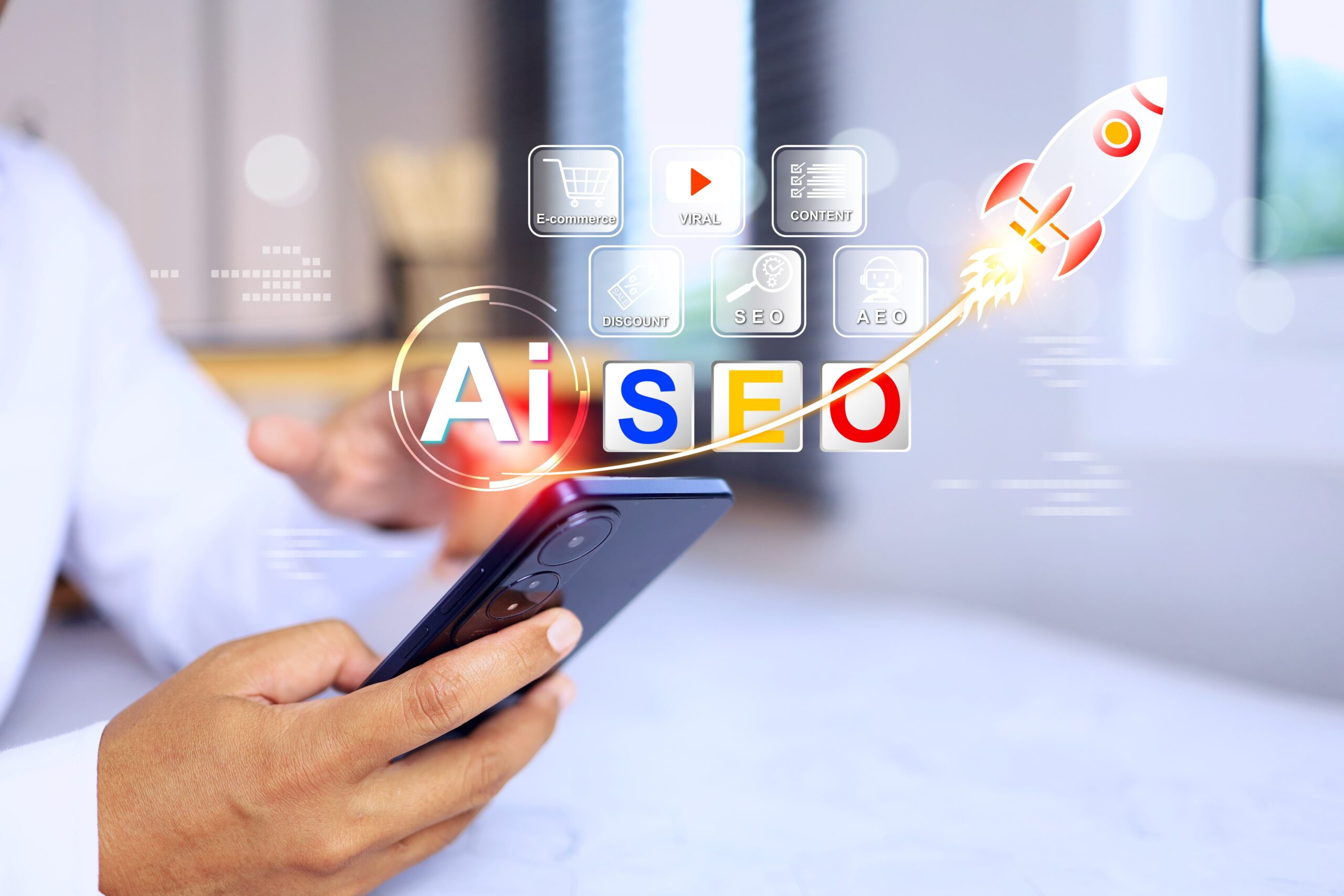
Traditional SEO is the work of ranking a page in a list of search results so a person clicks it. AI SEO is the work of getting your business cited, summarized, or recommended inside an answer that an AI engine writes.
You will also see AI SEO called answer engine optimization, or AEO, when the focus is direct answers, and generative engine optimization, or GEO, when the focus is the broader job of being pulled into AI responses. Different names, same basic goal. Traditional SEO earns the click. AI SEO earns the mention. They are not competing for the same budget, because they do different jobs at different points, and a complete 2026 strategy runs both.
| Feature | Traditional SEO | AI SEO |
|---|---|---|
| Primary goal | Rank and earn the click | Get cited in an AI answer |
| Focus | Keywords, title tags, page ranking | Concepts, direct answers, entity authority |
| Traffic source | Organic blue links, snippets | AI summaries (ChatGPT, AI Overviews, Perplexity) |
| Trust signal | Backlinks to your domain | Brand mentions on third-party sites |
| Measurement | Rankings, traffic, CTR | AI citations, brand mentions, share of voice |
The table makes them look like opposites. They are not. Look at the trust signal row again, because that is where the real story lives.
What Changed: From Keywords to Concepts
AI engines do not match keywords the way a search index does. They work with concepts and questions. Traditional SEO starts with keyword volume: you find that 720 people a month search a phrase, write a page targeting it, and try to rank. AI SEO starts elsewhere. When someone asks an AI a question, the engine breaks that question into smaller pieces and looks for the cleanest, most direct answer to each piece. It is not hunting for an exact phrase match. It is hunting for the clearest explanation of an idea.
That changes how you write. A traditional SEO page can bury the answer in the fifth paragraph and still rank, because the reader will scroll. An AI engine will not scroll. It reads in small chunks and pulls the chunk that answers the question most directly. So the winning move is answer-first writing: state the answer in the first sentence of a section, then explain. If your best sentence is buried, the engine never finds it. None of this breaks traditional SEO, since a page with clear, direct answers also tends to rank well and win featured snippets. You are not choosing a style, you are upgrading one.
What Changed: From Clicks to Citations
Traditional SEO wins a click. AI SEO wins a citation, and a citation behaves differently. When your page ranks third on Google, a person still has to choose you over the two results above you. When an AI engine names your business in its answer, there is no list to scroll. The engine handed you over as the recommendation, which tends to carry more weight because it arrives as an answer rather than an option.
This is also why the click is shrinking as the only goal. According to a 2025 Pew Research analysis, Google users clicked a search result in just 8 percent of visits when an AI summary appeared, compared with 15 percent when it did not, nearly twice as often without the summary. The traffic does not vanish, it moves into the answer. If your business is inside that answer, you are still in the conversation. If it is not, ranking fourth below the Overview is worth far less than it used to be.
The Trust Signal That Changed: Backlinks to Brand Mentions
Here is the row from that table that matters most, and the part most comparison articles rush past. Traditional SEO trusts you when other sites link to you. AI SEO trusts you when other sites talk about you, with or without a link.
For twenty years the currency of trust was the backlink, and that still works for ranking. AI engines added something on top: they cross-reference. Before an engine puts your name in an answer, it checks whether the rest of the internet agrees you are credible. It looks at reviews, forum threads, industry publications, directories, and community discussions. When a business shows up positively across many independent places, the engine treats it as a trustworthy entity worth recommending.
The consequence is uncomfortable for anyone who thought AI visibility was a formatting exercise. You can write the most perfectly structured page on the planet and still get passed over if nothing else on the web mentions you. Meanwhile a competitor with a slightly weaker page, but dozens of mentions across credible sites, gets pulled into the answer. The page is the ticket. The off-site reputation is what wins the seat. This is the heart of what changed for business reputation: AI SEO moves a big share of your authority off your own site, into places you do not control, and that reputation is now a ranking input for the answer.
Why Community and Reddit Now Affect Your Visibility
Community platforms, Reddit especially, now influence whether AI engines mention you. Search almost any "X vs Y" comparison and you will often find a Reddit thread at the top, sometimes above the brands being compared. AI engines lean on those threads too, because an unscripted conversation between real users reads as honest evidence. The same Pew analysis found Wikipedia, YouTube, and Reddit are the most frequently cited sources in both AI summaries and standard results.
That does not mean spamming links into threads. It means being genuinely present where your topic is discussed, answering questions, being useful, and letting real mentions form. For a business, community presence has moved from a nice-to-have to a real visibility signal. If your category is debated on Reddit and Quora and you are never mentioned there, an AI engine has one less reason to trust you.
How to Run Traditional SEO and AI SEO Together
The practical answer is not to pick one. It is to run them as two layers of the same strategy. Here is the sequence that works.
- Keep your traditional SEO foundation. Technical health, fast pages, clean structure, keyword research, and earned backlinks still matter, because AI engines crawl the same web Google does. A page they cannot find or parse cannot be cited. Strong SEO is what makes you eligible.
- Rewrite for extraction. Put the direct answer in the first sentence of each section. Add specific numbers, dates, and named sources. Use tables and lists where they fit. This single pass helps both rankings and AI citations.
- Build off-site reputation on purpose. Pursue mentions in the publications and review sites your audience trusts, show up in the communities where your topic is discussed, keep your business details consistent across directories, and earn references from credible sources. Deep, consistent coverage of your subject is how you build topical authority that both search engines and AI engines recognize.
- Measure both. Track rankings and organic traffic as always, then add the new metrics: how often AI engines mention you, what they say, and how you compare to competitors in those answers.
How to Measure Each One
Traditional SEO and AI SEO need different scorecards, and using only the old one will hide whether the new work is paying off. For traditional SEO, the metrics are familiar: keyword rankings, organic sessions, click-through rate, and the backlinks and referring domains pointing to your site. These tell you how you are doing on the results page.
For AI SEO, the metrics are newer and the tooling is younger. Citation frequency tracks how often you appear in AI answers. Share of voice, sometimes called share of model, tracks how often you appear compared to competitors for the same questions. Sentiment tracks whether the mentions are positive. And brand mention volume across the web tracks the off-site footprint that feeds all of it. Treat these as direction rather than precision, because the measurement space is still maturing, and weight the trend over any single reading.
Is Traditional SEO Dead?
No. Traditional SEO is not dead, it is evolving, and the brands acting like it died are making an expensive mistake. AI engines retrieve from the same open web that traditional search uses, which means your SEO foundation is the thing that makes AI visibility possible in the first place. Nothing about that has been switched off. Running both layers does not require an enterprise budget, which is the whole idea behind affordable AI SEO for small businesses.
What changed is that ranking is no longer the finish line, it is the starting line. You still do the technical work, the content work, and the link work, because that is what gets you found and parsed. Then you add the new layer: writing for extraction and building a reputation across the web so AI engines trust you enough to cite you. The work did not get replaced. It got a second floor. That second floor is where you build organic reputation online.
Final Thoughts
The cleanest way to hold all of this is to stop thinking of traditional SEO and AI SEO as rivals and start thinking of them as two halves of being findable in 2026. One half gets you onto the page. The other half gets you into the answer. They share the same foundation of clear, credible, genuinely useful content, pointed at two different readers, a search engine and a language model.
The businesses that struggle are the ones picking a side. The ones that pull ahead treat the comparison as a to-do list rather than a debate. Keep doing the traditional work that earns trust. Add the reputation work that earns citations. Do both, consistently, and you stop competing for a position and start being part of the answer.
Genius Rank
Genius Rank is an AI-powered platform for building business reputation and digital authority through a vetted community of more than 500 businesses across 50-plus industries. It combines AI reputation tools, including SEO audits and competitor intelligence, with the off-site authority signals AI engines look for when they decide who to cite. See how AI search engines perceive your brand and join hundreds of businesses building their digital authority. Apply free at geniusrank.com.
Frequently Asked Questions
SEO is evolving, not dead. AI engines retrieve from the same open web that traditional search uses, so strong SEO foundations are still what make AI visibility possible. Ranking is now the starting point, with citation optimization and off-site reputation layered on top of traditional ranking work.
Traditional SEO optimizes a page to rank in search results and earn a click. AI SEO optimizes your content and reputation so AI engines cite or recommend your business inside their answers. One competes for a position on a page. The other competes to be part of the answer itself.
AI is not replacing SEO, it is changing what success looks like. Instead of only ranking pages, businesses now also need to be cited inside AI answers. Since AI engines crawl the same web Google does, traditional SEO stays the foundation, and AI SEO is a layer added on top of it.
No. They do different jobs and work best together. Traditional SEO makes your content findable and credible, which makes it eligible for AI citation. AI SEO adds answer-first writing and off-site reputation building. A complete strategy runs both rather than trading one for the other.
AI SEO is often called answer engine optimization, or AEO, when the focus is winning direct answers, and generative engine optimization, or GEO, when the focus is being cited across AI-generated responses. The terms overlap, and all describe getting a business mentioned and recommended by AI engines.